
Searching Chattahoochee County Criminal Dockets
Pick your court first, then pick your route. In Chattahoochee County, felony criminal records live mainly at Superior Court, and the Magistrate, Probate, and Juvenile functions each set their own limits. The clerk's Case Search page sends visitors to Icon. Without an account, though, you get UserID, UserPassword, Log In, and Remember User Name rather than any public name or case-number form.
Before you start a docket search, gather the basics. Have the case number or public case style, the likely court, and a date range that actually helps. If all you need is a hearing date, the Court Dates route begins with the county's current PDF index. A full register, charging instrument, disposition, or signed order may still require an authorized account or a written request to the clerk.
- Classify the matter as Superior, Magistrate, Probate traffic, or Juvenile before searching.
- Open the county Case Search link and note that Icon requires credentials before search fields appear.
- Use Georgia Courts E-Access to route Chattahoochee Superior matters to an account-based provider.
- Check the live county calendar index for a Criminal Calendar Call or another published setting.
- Call or visit the proper office when a calendar is incomplete or the record is restricted.
- Mail a focused request to the clerk or ask for the Georgia Open Records process when appropriate.
Chattahoochee County Criminal Docket Limits
A setting sheet and a criminal register answer two different questions. The county's Criminal Calendar Call sample lists a case style, the count or charge, counsel, a bondsman or own-recognizance field, and co-defendants. That is all it lists. It will not show every filing, event, plea, sentence, or document image in the criminal docket. So ask for the full register when your question turns on history or outcome.
One more caution applies to online searching. The Tyler re:SearchGA route is a provider access layer. It is not proof that a public Chattahoochee docket search works without an account. The official Tyler portal reflects that separate route. You should read it alongside the county calendar and the clerk's instructions. Treat it as one tool, never as a promise of open and complete coverage.
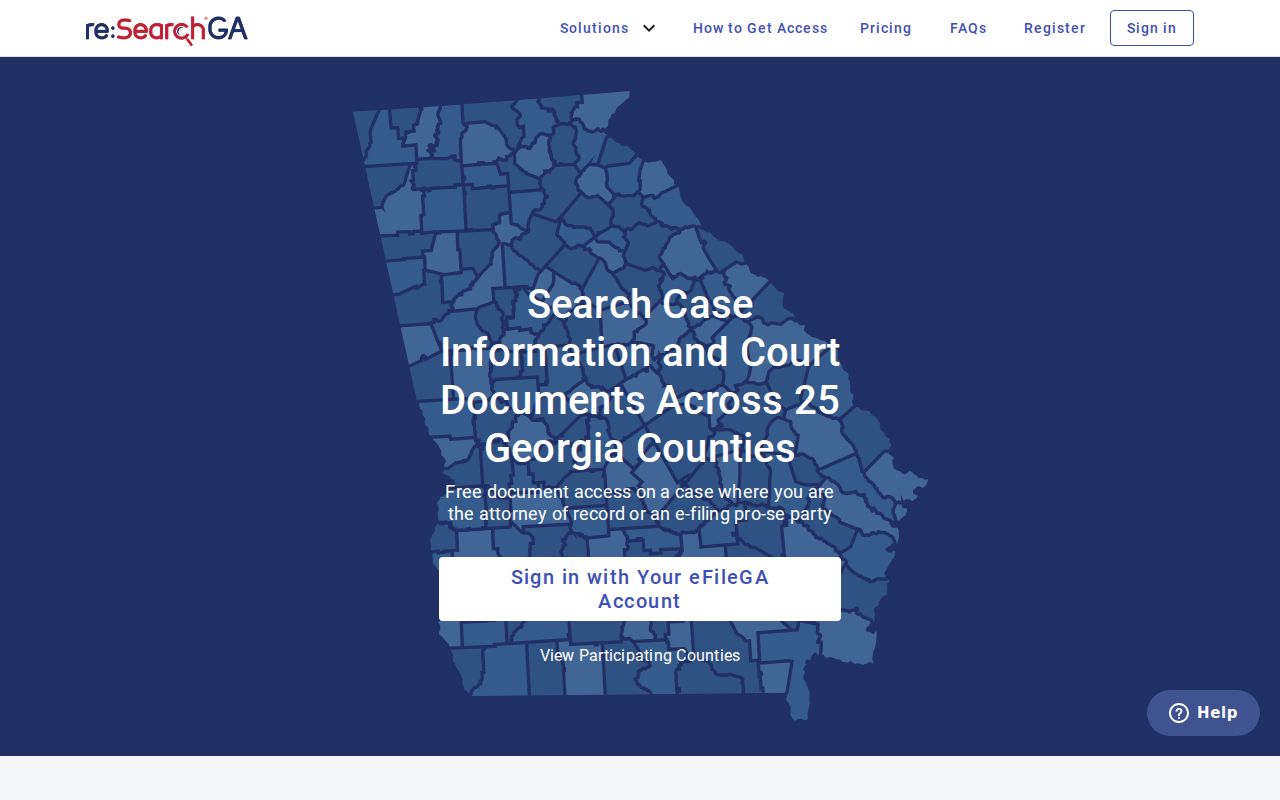
A calendar hit means a setting appeared in the PDF when it was made. A docket request asks the clerk for the record of filings and events instead.
| Access layer | What it may show | What it does not establish |
|---|---|---|
| Criminal Calendar Call | Setting, charge/count, counsel, and release-related fields | A trial result, conviction, sentence, or complete history |
| Full criminal docket | Filed events, pleas, dispositions, orders, and cross-references | That every attachment is public or unredacted |
| Trial setting | A scheduled courtroom event | That the case was tried or decided that day |
Note: A calendar PDF is a time-stamped view of a setting, not a substitute for the clerk's register or a signed order.
Inside a Chattahoochee County Criminal Docket
Georgia Uniform Superior Court Rule 39.3 spells out the full record model for a criminal docket. It covers case number and filing date, defendant and OBTS fields, counsel, counts, charging instruments, judge, plea, jury, disposition, sentence, costs, fines, restitution, warrants, appeals, remittitur, and storage cross-references. The public county calendar shows only a slice of that model.
A format like YY-CR-NNN describes the visible year, the criminal case marker, and the sequence. It does so without repeating a real person's number. When you write to the clerk, use the exact case number the office generated. A calendar row can locate a matter. It cannot supply fields the public PDF never displays.
| Case number and filing date | The clerk's identifier and the date the criminal matter was filed; the public sample shows a pattern, not a complete history. |
|---|---|
| Counts and charge | Individual alleged offenses and the charging instrument, such as an indictment or accusation. |
| Case style and counsel | The caption, prosecution attorney, defense attorney, and any later representation changes. |
| Settings and proceedings | Calendar call, arraignment, pretrial, trial, motions, and other events when entered in the register. |
| Plea and disposition | The defendant's response and the result or closing treatment, each with its own date when recorded. |
| Sentence and review | Conditions, costs, fines, restitution, warrant entries, notice of appeal, and remittitur cross-references. |
Bond information is not a sentence. A charge is not a conviction. A blank future calendar line does not mean a dismissal, an acquittal, or a nolle prosequi either. For those conclusions, you need the register, the order, or another official disposition record from the court.
Chattahoochee County Criminal Charge Lines
The Chattahoochee County Criminal Calendar Call organizes each setting around a count or charge column. That line shows what the prosecution placed before the court, nothing more. No judge or jury finding hides inside it. Counsel fields can change as a case moves. A bondsman or own-recognizance entry describes a release posture, not a final result.
Three terms keep the reading precise. An indictment or accusation is a charging instrument. A plea is the defendant's response. A disposition is the recorded result, whether a dismissal, a plea outcome, an acquittal, a judgment, or another treatment the docket recognizes. Never use the public calendar to choose among those outcomes.
- Calendar call
- A scheduled call used to announce or organize pending matters; it is not the same as a trial.
- Charge
- An alleged offense or count listed in the charging record or calendar; it is not proof of guilt.
- Disposition
- The official result or closing treatment entered in the criminal record.
- Sentence
- A punishment or court-ordered condition entered after the case reaches the sentencing stage.
Read the printed date and the setting date side by side. Each one means something different in a court docket. If a charge line matters for a formal matter, ask the clerk for the charging instrument or the docket entry itself rather than trusting a copied calendar row.
How a Criminal Case Moves
A Chattahoochee County criminal case may move through Filing → Arraignment → Pretrial → Plea or Trial → Disposition → Sentencing. The sequence is a map, not a claim that every case reaches every step. A case can be resolved by plea, dismissed, transferred, or otherwise closed before trial.
Every criminal case in the docket follows the same path. The clerk's record begins with the filing. Arraignment comes next, where the charge is read and a response is entered. Pretrial settings handle motions, discovery, readiness, and other preparation. A calendar call may sort out the next event. Plea or trial is the decision stage. Disposition records the result, and sentencing records any punishment or conditions imposed.
The difference matters when a calendar PDF lists a case for a calendar call. That entry shows a scheduled court event, nothing more. It does not prove testimony was taken. Nor does it show a plea was accepted or a judgment was entered. The register of actions and any signed orders control those questions. Read the docket entries alongside them before drawing conclusions about what happened in the case.
Chattahoochee County Icon Access
The county's Case Search link opens an Icon Case Management login. That screen asks for a UserID and a UserPassword. Below those sit a Log In control and a Remember User Name checkbox. A guest gets no party-name field. There is no case-number box, no date or disposition filter, and no sample results. So read the login wall as an access condition. It is not evidence that no case exists.
Georgia Courts E-Access is a routing directory, not one statewide index. Its Chattahoochee Superior path hands you to a provider. It states plainly that an account is required. Tyler's help material describes registered, attorney, and party roles. It also covers limits on restricted criminal, adoption, and mental-health data.
The re:SearchGA access and role guidance spells out those limits on the provider's own help page. The live endpoint, meanwhile, stops most visitors at an access barrier. Don't guess at required fields, result sorting, coverage dates, or what a no-results screen would look like.
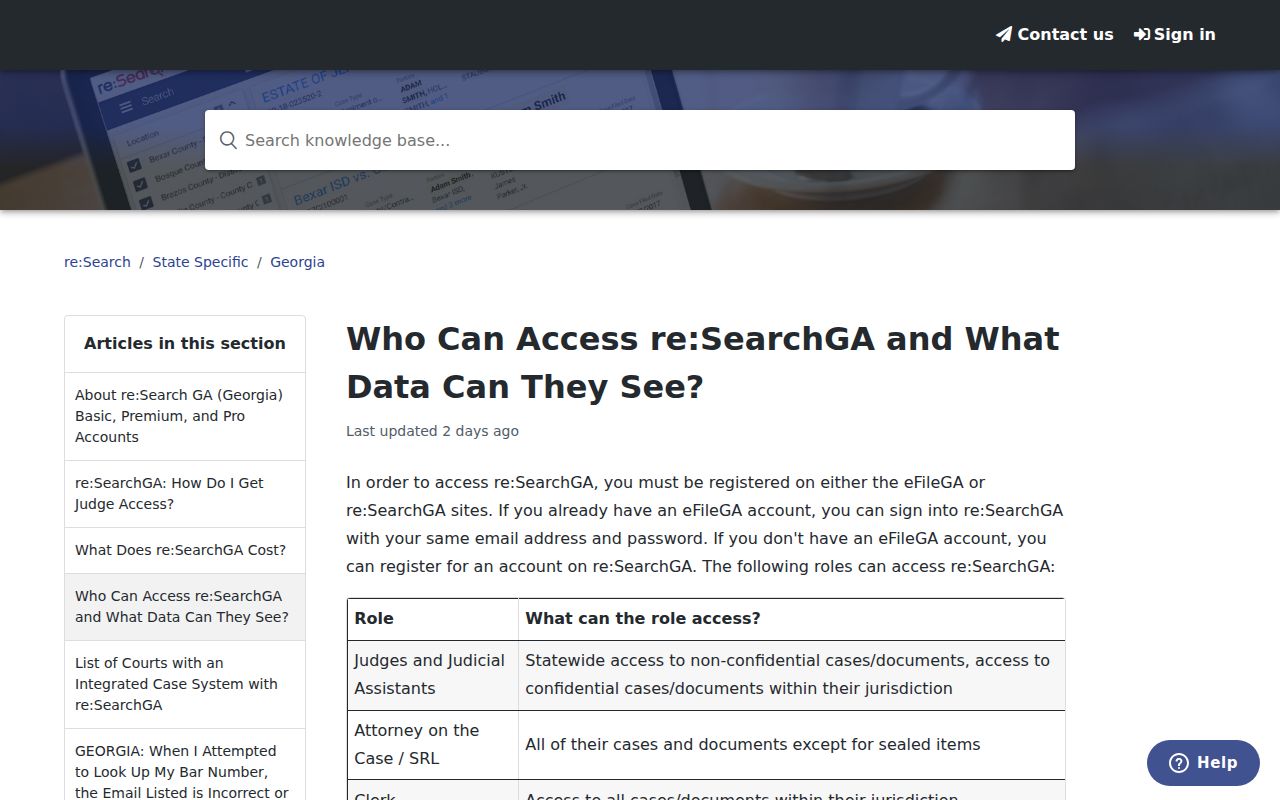
No credentials, or a case that just isn't there? The lawful fallback chain runs through the clerk's phone, the counter, a mail request, and the formal public-record route.
Note: A login barrier records an access condition, not a conclusion about whether a Chattahoochee County criminal case exists.
Courts That Hold Criminal Dockets
Felony matters land on the Superior Court of Georgia. That is part of the Chattahoochee Judicial Circuit. That court holds the central criminal docket. The county directory also lists Magistrate, Probate, and Juvenile functions. Each has its own record path. The official institutions list shows no separate Chattahoochee State Court or Municipal Court. Material from Muscogee State or Columbus municipal courts is not part of a Chattahoochee criminal docket.
Let the charging paper or citation tell you the venue. Don't send a criminal question to the wrong office. A provider name alone may just ring a bell. The county clerk's office keeps the Superior, Juvenile, and Magistrate clerk files. The Probate office separately handles local misdemeanor traffic and probate records.
| Court | Criminal role | Documented route |
|---|---|---|
| Superior Court | Felony criminal matters and related Superior proceedings | Clerk, Icon, calendar PDFs, and authorized provider access |
| Magistrate Court | Preliminary criminal matters and specified summary functions | Magistrate office or clerk inquiry |
| Probate Court | Locally handled misdemeanor traffic according to county information | Probate Court office and citation instructions |
| Juvenile Court | Delinquency and dependency matters with restricted access | Juvenile clerk function; JDEX is authorized access, not a public index |
Chattahoochee County Clerk of Superior Court
379 Broad Street
Cusseta, GA 31805
706-989-3424
Mail: P.O. Box 120, Cusseta, GA 31805. Call before an in-person visit because terminal access, hours, payment methods, and copy turnaround were not published.
Chattahoochee County Criminal Providers
The county's e-filing notice splits its products apart. Odyssey eFileGA is the announced electronic filing route. It covers Superior Criminal, Magistrate, and Juvenile cases. PeachCourt handles civil filing and retrieval. Treat it as a civil tool, not a universal criminal docket viewer. Georgia Courts' e-filing matrix adds other Superior provider choices such as GreenFiling and InfoTrack.
Tyler re:SearchGA is a separate, account-based search and document service. Its help materials describe search options by party or name, case number, county, court, and provider. Advanced filing, document, and hearing criteria are also described. The live required fields and Chattahoochee coverage remain unstated. GSCCCA eFile covers real-estate and UCC recording only. GSCCCA eCertification authenticates a digital certified document, and it is not a free case index.
The Odyssey eFileGA landing page is the official vendor endpoint. County and state materials both name it. It leans on a JavaScript and account workflow. An unauthenticated loading screen there is not a public search result. Don't mistake it for one.
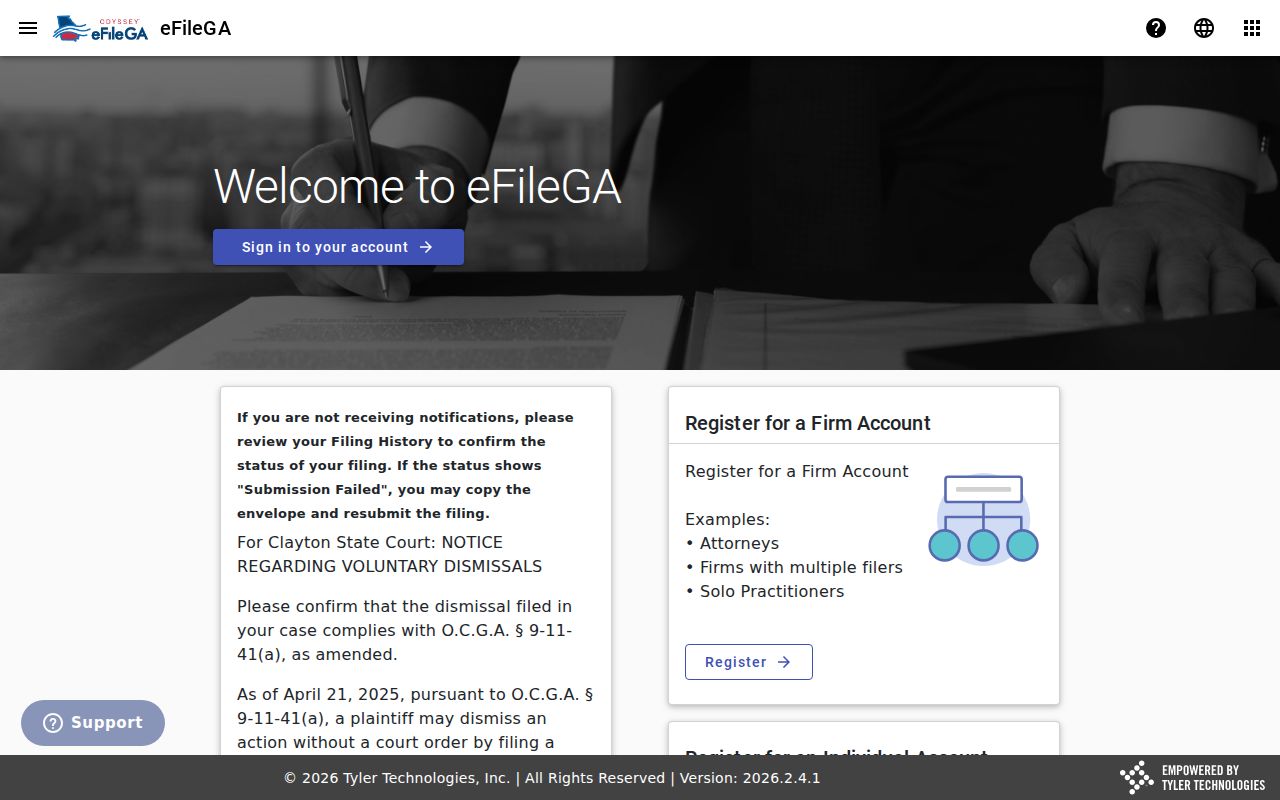
Want a full criminal docket, charging instrument, disposition, or certified copy? Ask the record holder which provider or clerk process fits that court and case type.
Chattahoochee County Criminal Caseload
Workload numbers need a boundary label before anyone quotes them. The 2025 Superior Court Workload Assessment describes the Chattahoochee Judicial Circuit. It counts six counties: Chattahoochee, Harris, Marion, Muscogee, Talbot, and Taylor. Its three-year average runs to about 4,257 criminal defendants. The span covers serious felony, felony, serious-traffic, misdemeanor, and probation-revocation categories.
The same circuit table reports seven Superior judges and 1,192 cases per judge. Those figures measure circuit resources. They are not a count of Chattahoochee County criminal cases. They say nothing about any person's record. They do explain why a circuit PDF or provider directory can hold material from several counties. A county search must confirm venue before you trust it.
Read the workload assessment for planning, not as a county case lookup. Real docket answers still come from the clerk, an authorized record system, or the current court file.
Sealed Dockets and Public Access
Georgia starts from a broad public-access baseline, but the baseline bends. Uniform Superior Court Rule 21 permits limits. They may rest on law, privacy protection, a protective order, or a court order. Rule 21.6 and O.C.G.A. § 9-11-7.1 cover protected personal identifiers and family-violence or stalking registry information. A docket entry can stay public while an attachment sits sealed or redacted.
Juvenile and adoption material carries stronger confidentiality rules. JDEX serves authorized users, not the general public. Tyler provider roles can add another layer of restriction for criminal, adoption, and mental-health categories. A document can go missing for several reasons. The cause may be role limits, date coverage, sealing, or redaction, not an absent case.
Public-access checkpoints:
Uniform Superior Court Rule 21 provides the public-record baseline and the process for limiting access.
Georgia Open Records guidance explains response, description, fee, redaction, and denial practices under O.C.G.A. § 50-18-70 et seq.
Georgia Courts JDEX describes authorized juvenile data access and confidentiality limits.
For a missing or restricted record, send a focused request to the confirmed record holder. The Clerk of Superior Court accepts mail at P.O. Box 120, Cusseta, GA 31805. Include the court and the case number if known. Add the public party or case style, the date range, and the exact docket event or document you want. Ask for a redacted non-exempt version, a fee estimate, and the legal authority behind any withheld portion.
Call or visit before mailing anything time-sensitive. The clerk number is 706-989-3424; Probate is 706-989-3603; Magistrate is 706-989-3643. The GSCCCA directory lists a fax number that differs from an older county page. Verify the destination first. The clerk offers no confirmed public email or dropbox. There is no confirmed terminal count, local copy schedule, or turnaround guarantee.